
Ecommerce SEOUnited States Verified GSC data

Monthly net sales from $5,832 to $19,100 in two months — after rebuilding thin content, indexing and site quality across a 35,000-product catalog.

+227%

Monthly net sales

$5.8K

April 2026

$19.1K

June 2026

Measured over April – June 2026 · Verified in the store's WooCommerce dashboard

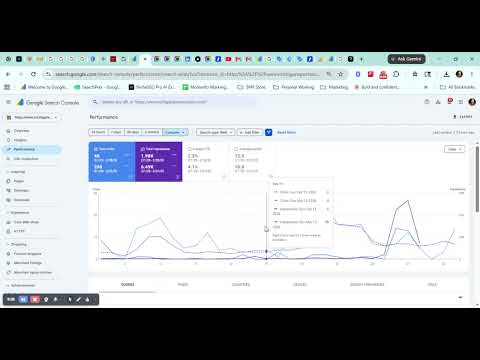
SMK Store Ecommerce SEO case study — live Google Search Console screen recording
Live GSC screen recording
The engagement

How we took SMK Store from stuck to ranking

The challenge

Ecommerce · United States

SMK Store's 35,000+ product pages were barely indexed. Thin, near-identical boilerplate descriptions triggered Google's duplicate-content filters, Core Web Vitals were failing, and US organic revenue had stalled.
The strategy

Ecommerce SEO

We rewrote product content brand by brand with unique, people-first descriptions, optimized crawl budget, implemented product schema, fixed Core Web Vitals, and resubmitted pages to GSC in batches — aligned with Google's 2026 Helpful Content standards.

The outcome

Verified in Google Search Console

Monthly net sales rose from $5,832 in April 2026 to $19,100 in June 2026 — a 227% increase in two months, with no additional ad spend, as shown on the store's WooCommerce dashboard.

Monthly net sales
+227%Monthly net sales
April 2026
$5.8KApril 2026
June 2026
$19.1KJune 2026

What we found

Where SMK Store was when the work started

  • Low-quality, thin product and brand pages
  • Crawl budget wasted on low-value URLs
  • Thousands of pages crawled but not indexed
  • UI/UX problems on product and category templates
  • Slow pages and failing Core Web Vitals
  • Weak internal linking between brands, categories and products
  • Near-duplicate manufacturer descriptions
  • No structured data implemented at all
  • No backlinks
  • No E-E-A-T signals — no clear author, brand or trust pages

What we fixed

The work, step by step

1A content autopilot for thin pages

SearchPrex built its own content autopilot to rewrite thin product and brand pages at scale — unique, useful copy per page instead of the manufacturer's boilerplate — published in batches and re-measured in Search Console before the next batch went out.

2Crawling and indexing

Crawl waste removed, sitemaps rebuilt and submitted directly, and pages resubmitted in batches so Google spent its visits on the pages that sell.

3Speed and Core Web Vitals

Template-level performance fixes, so every product page got faster at once rather than one at a time.

4UI/UX on the templates that convert

Product and category templates restructured so shoppers — and Google — can see what a page is for.

5Internal linking

Brands, categories and products linked to each other deliberately, so authority flows to the pages that earn money.

6Structured data

Product, Offer, Breadcrumb and Organization markup built from the data each page already renders.

7Backlinks and E-E-A-T

Link building started from zero, alongside the brand, author and trust signals the site had none of.

The proof

Unedited screenshots

Click any of them to read the numbers yourself.

How SMK Store was fixed, step by step

The 35,000-product indexing playbook (PDF)

  • The 8 steps in order, from Search Console diagnosis to batch resubmission
  • SMK Store: $5,832 → $19,100 a month, with the dashboards
  • Michigan Sports & Outdoor: ~3,000 → 11,549 indexed pages, setback included

Instant download. No newsletter.

Your business could be the next case study.

Send your URL. A written tear-down of your site and your top competitors — from me, within 24 hours.

Or book a 30-min call
Reality Check